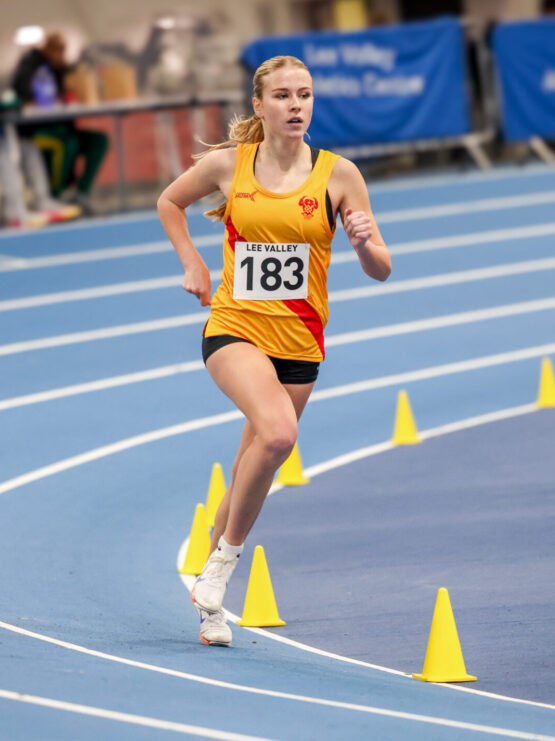
Story By Coach Bjorn Jansen
Athletes often misunderstand 800m strength training. Some athletes avoid the gym entirely, while others treat strength sessions as separate from running. In reality, effective strength work supports speed, posture, and durability rather than bulk. At SpeedPro in Wimbledon, our athletics coaching uses strength development to enhance running mechanics and race execution, not as a standalone goal.
Understanding how 800m strength training fits into the wider programme helps athletes run faster, hold form under fatigue, and stay healthy across the season.
Why Strength Matters for 800m Performance
The 800m demands repeated force production at high speed. Athletes must accelerate efficiently, maintain posture through fatigue, and change pace under pressure. 800m strength training improves how athletes apply force through the ground, supporting all three demands.
At SpeedPro, we treat strength work as a way to reinforce movement quality. Athletes who develop appropriate Strength tend to maintain better mechanics late in races, which directly influences finishing speed and positioning.
Strength Work and Running Mechanics
Good mechanics rely on the ability to control posture and limb movement at speed. Targeted strength sessions improve core stability, hip control, and lower-body coordination, all of which influence stride efficiency.
Rather than chasing heavy lifts, our coaching focuses on exercises that transfer directly to running. Controlled squatting patterns, hip-dominant movements, and single-leg stability work help athletes stay tall, relaxed, and efficient as fatigue builds.
How Strength Supports Speed Endurance
Speed endurance underpins successful 800m racing. Athletes who lack Strength often slow dramatically in the final stages because their mechanics break down. 800m strength training helps athletes resist this decline by improving muscular resilience.
At SpeedPro in Wimbledon, our athletics coaching integrates strength sessions alongside speed endurance work. This combination allows athletes to apply force repeatedly without losing rhythm, leading to more controlled pacing and stronger finishes.
Timing Strength Sessions Within the Week
The effectiveness of 800m strength training depends heavily on timing. Poorly placed gym work can compromise key running sessions, while well-timed strength work enhances adaptation.
Our coaching places strength sessions where they support, rather than compete with, track work. Strength-based training often follows speed or technical sessions, allowing harder aerobic work to remain unaffected and helping athletes absorb training without unnecessary fatigue.
Individual Approaches to Strength Development
Not all athletes require the same strength emphasis. Age, training history, injury background, and event focus all influence how 800m strength training should look.
At SpeedPro, our coaching adapts strength work to the individual. Some athletes benefit from added stability and control, while others require more force development. This tailored approach ensures Strength supports performance rather than adding unnecessary load.
Common Strength Training Mistakes
One common mistake is lifting heavy without purpose. Another is copying gym programmes designed for pure sprinters or distance runners. Both approaches often lead to stiffness or excessive fatigue.
Our coaching avoids these pitfalls by keeping strength sessions specific, progressive, and integrated. Every exercise has a clear role within the wider training plan.
Final Thoughts
Effective 800m strength training supports speed, posture, and resilience rather than chasing size or numbers. When applied correctly, it helps athletes hold form, respond to moves, and finish races with control.
At SpeedPro, our athletics coaching in Wimbledon uses strength work to enhance running performance, not replace it. Through careful planning and individual attention, we help athletes build Strength that translates directly to faster, smarter racing.