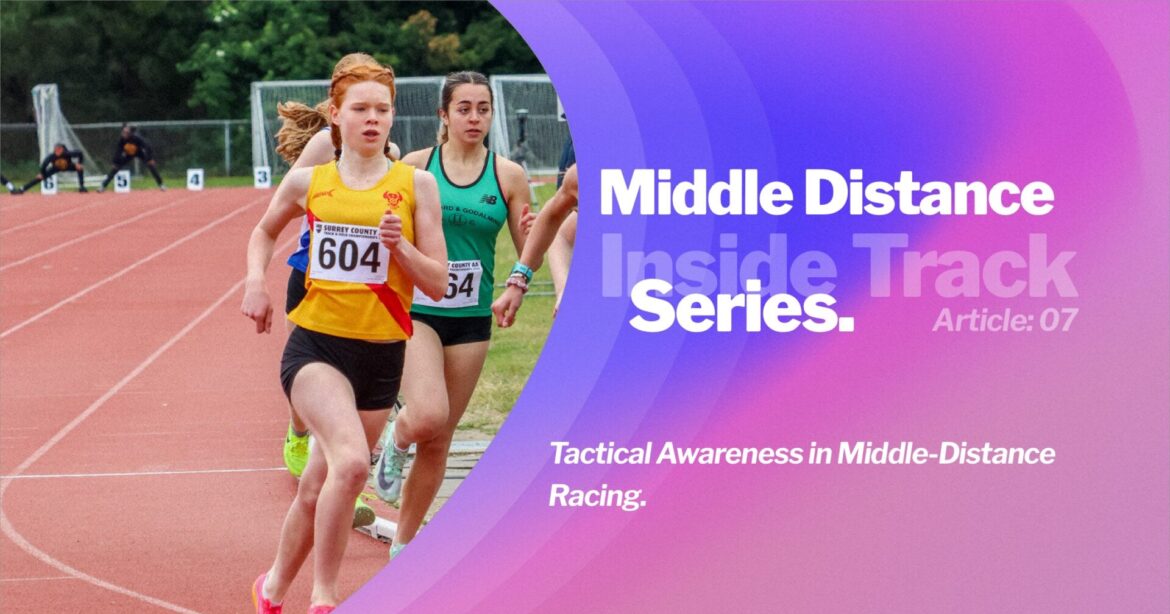
Story By Coach Bjorn Jansen
Why Tactical Awareness in Middle-Distance Racing Matters
Many athletes prepare diligently for 800m and 1500m races. They log their mileage, hit their sessions, and arrive at championships in good shape. Yet results often hinge on something less visible: the ability to read and react to a race in real time. Tactical awareness in middle-distance racing is that ability, and developing it is as important as any physical quality.
A tactically aware athlete notices when the pace softens and responds. They recognise when a rival is moving through the field and decide whether to follow or hold their position. They understand when to conserve energy and when to commit. These decisions happen fast, often in fractions of a second, and they shape the outcome of championship races.
Reading the Race Around You
Tactical awareness in middle-distance racing begins with attention. Athletes who are absorbed entirely in their own discomfort often miss the critical moments unfolding around them. Developing a broader awareness, one that takes in the positions of rivals, the feel of the pace, and the stage of the race, is a learnable skill.
In an 800m, this awareness needs to be immediate. The race is short enough that a single missed cue can cost several positions in a matter of strides. In the 1500m, there is slightly more time to assess, but the final lap still rewards those who have been reading the race throughout, not just those who react at the bell.
Experienced coaches encourage athletes to practise this awareness in training. Tactical group sessions, where athletes run together at varied paces, help develop the habit of noticing what is happening beyond their immediate effort.
Responding to Pace Changes
Pace changes are the defining feature of championship middle-distance racing. In a well-matched field, the pace will rarely stay constant from gun to tape. Surges test composure and fitness simultaneously. Knowing how to respond is central to tactical awareness in middle-distance racing.
There are broadly two approaches when a rival surges: go immediately, or wait and assess. Neither is always right.
The decision depends on the race stage, the athlete's condition, and the source of the surge. If a rival moves with 600 metres remaining in a 1500m, going immediately might deplete the energy needed for a stronger finish. If that same move happens with 200 metres to go, hesitation could be fatal to the race.
The key is developing a feel for these moments through race experience and post-race reflection. Athletes who review their decisions honestly, ideally with a coach, grow their tactical toolkit with every competition.
Staying Composed Under Pressure
Tactical awareness in middle-distance racing is only useful when an athlete can access it under pressure. Anxiety narrows focus. Athletes who are tense and overwhelmed in a championship environment often make reactive choices, following every surge, going too early, or panicking when boxed in.
Developing composure is therefore inseparable from developing tactical awareness. Breathing control, pre-race routines, and race simulation in training all contribute to an athlete's ability to stay calm and think clearly when it matters. SpeedPro coaches integrate this work into their athletes' preparation because tactical quality and physical quality reinforce each other.
Developing Tactical Intelligence Over Time
Tactical awareness in middle-distance racing grows with experience, reflection, and coaching. Every race offers new insights into how the athlete responds to pressure, reads the pace, and makes decisions in a competitive environment.
Athletes who compete frequently in representative events, combine that experience with honest post-race analysis, and train in realistic group sessions will develop tactical intelligence faster than those who focus solely on physical preparation. Over the course of a full season, the accumulation of these experiences builds a genuine competitive edge.
If you want to sharpen your tactical awareness alongside your physical conditioning, SpeedPro's coaching programmes provide the structured environment to develop both.
Next in the Middle Distance Training Series
-

Pacing Errors That Cost 800m and 1500m Races
Pacing errors in middle-distance racing are among the most common reasons talented athletes underperform. Learn which mistakes to avoid and how to run smarter.