Story By Athlete - Neva Jansen
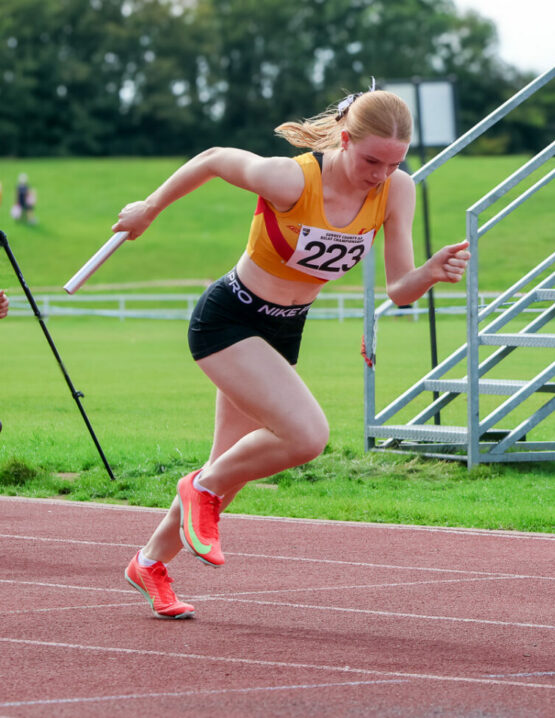
Sprint training might not be the first thing people associate with discus, but it has become an important part of my training. As an athlete, power, speed, and coordination all play a role in performance. Including sprinting has helped me feel more explosive, more connected in my movements, and more confident when transferring speed into competition.
I have always enjoyed sprinting. The feeling of running fast and the adrenaline from a sprint session have often been a welcome break from technical throwing work. Over time, I noticed that speed work improved my discus performance. In almost every athletics event, speed and power matter, and that applies far beyond the throws.
Why Sprint Training Improves Performance
Sprint training develops the ability to produce force quickly, which is essential in all sports. While strength is important, being able to apply that strength at speed is what makes the real difference. Speed sessions help build this connection between power and movement.
In discus, much of the power comes from the legs. You move through the circle slowly at first, then accelerate through the middle phases and release the discus quickly. The movement itself only lasts a few seconds, so you need to be able to change speed efficiently. The sprint sessions help develop that acceleration and control, allowing you to move more effectively and apply force at the right time.
How Sprint Training Fits into My Week
In a normal training week, speed work appears twice, usually on Tuesday and Sunday. This winter season, I have been far more consistent with these sessions. Alongside the power work I do in the gym, sprint training has helped me improve my speed and smoothness across the circle.
As a result, I feel more stable, more controlled, and faster during my throws. That confidence has carried into both training and competition, showing how valuable sprint training can be when used consistently.
Why Sprint Training Works for All Athletes
Sprint training is not just beneficial for throwers. It plays a role across every discipline. Middle-distance runners rely on speed to finish races strongly. Long jumpers need speed to create an effective take-off. In football, sprinting helps players create space, chase the ball, and change the game in key moments.
Speed exists in every sport in some form. Sprint training develops that quality and helps athletes become more efficient, more powerful, and more confident in their movement.
Final Thoughts
Sprint training has become a key part of my development, especially during the winter. Seeing how improved speed and coordination translate into better performance has reinforced its importance in my training. No matter the sport, sprint training plays a valuable role and deserves a place in any athlete's programme.